
Understanding the Limits
Self-playtesting is an essential design tool, but it isn’t a perfect substitute for real players. Here’s what you need to keep in mind:
- You can’t simulate social dynamics.
Elements like negotiation, bluffing, table talk, and group psychology are hard to reproduce when you’re the only player.
As Tabletop-Creator.com notes, “You can’t really test social interaction or bluffing mechanics alone.” - You’re biased and you know the system.
As the designer, you already know the rules, the strategies, and the optimal paths. This bias can unconsciously make your prototype “feel” smoother than it really is. - Tracking everything can be exhausting.
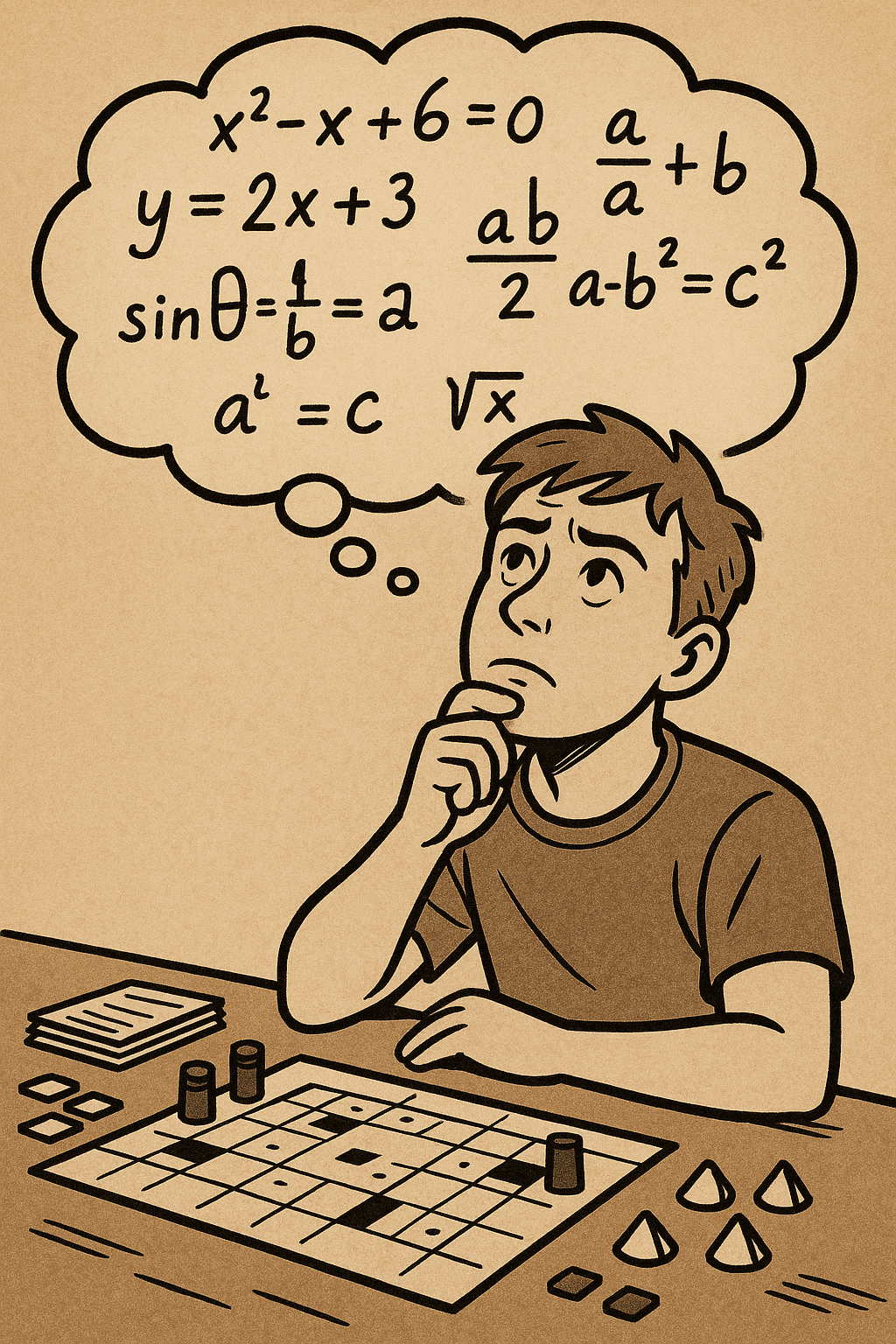
Many designers note that playing as multiple players can become mentally draining and error-prone:
“My biggest issue sometimes is trying to keep track of everything, especially at four players. It’s easy to make a mistake…”
(boardgamedesigncourse.com)
How to Overcome These Challenges
- Set clear time limits for each session.
Don’t just play endlessly. Fixing a time window (e.g., 30-45 minutes) keeps your sessions focused and closer to what a real game night would feel like. - Use quick aids and reminders.
Post-it notes, markers, or simple labels can help you remember each “player’s” strategy and role. One designer suggests:
“I use scraps of paper in front of each player to indicate which strategy they’re pursuing.” - Stop, review, then change.
After each run, pause and reflect before jumping into another game. Adjust one or two variables at a time and record how the change affects gameplay. Avoid the trap of running dozens of sessions without reflection. - Transition to real playtests when ready.
Once your game “engine” runs smoothly on its own, it’s time to bring in others. External players will reveal the social, psychological, and experiential layers that solo play can’t reproduce.
The Takeaway
Self-playtesting is like your laboratory. It’s where you fine-tune the math, balance the mechanics, and structure the flow safely and efficiently.
But remember: a game lives and breathes through people. Once your internal tests feel solid, let others join in and bring your world to life.
Discover more from BoardGame Seeds
Subscribe to get the latest posts sent to your email.


Leave a comment