
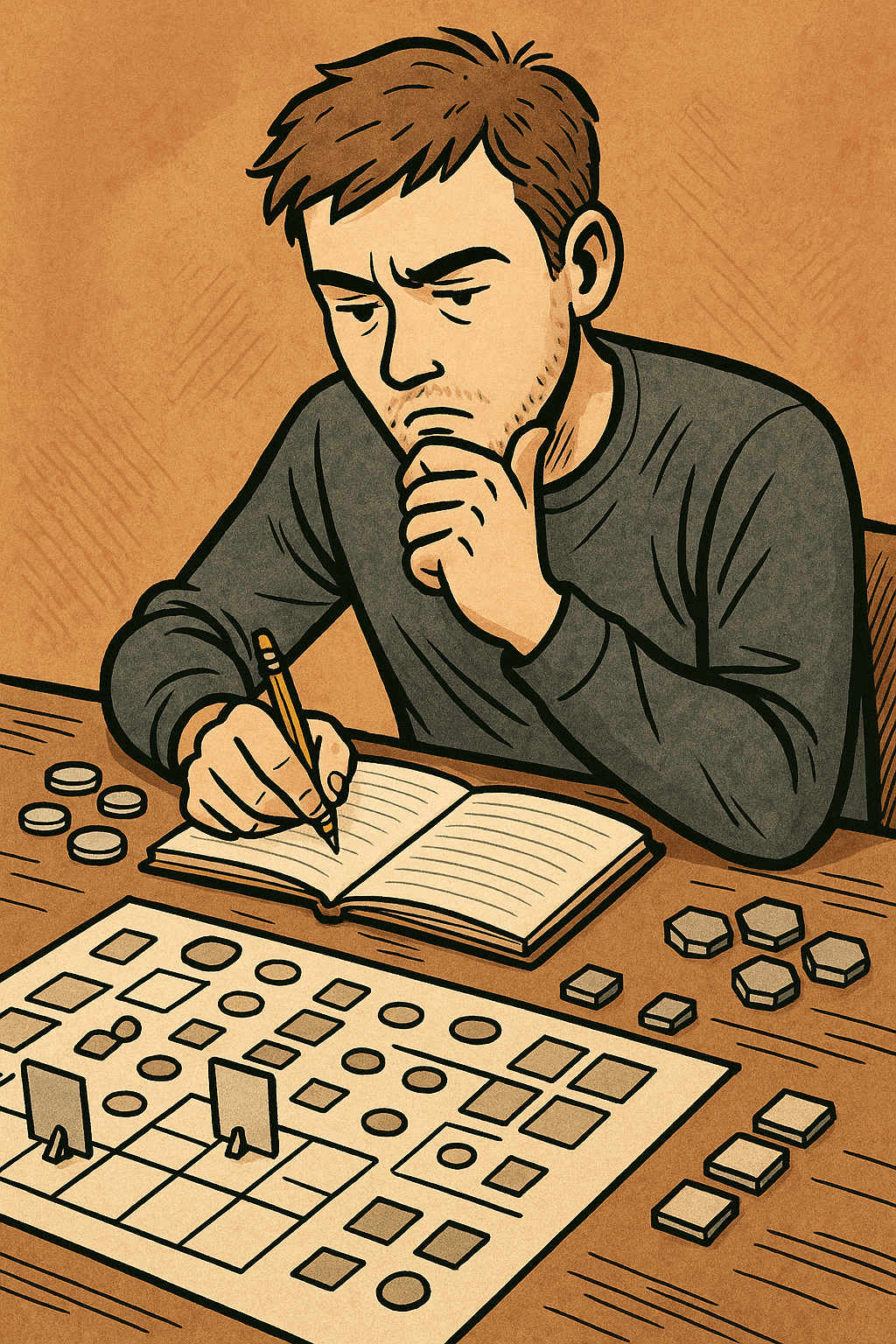
1. Build a Functional MVP (Minimum Viable Prototype)
Before you begin, make sure you have at least a basic version of your game — rules, components, and setup. It doesn’t need to be pretty or polished; it just needs to work.
As Playtesting Best Practices explains, “Creating your Minimum Viable Game means crafting the simplest playable version of your concept then self-playtesting that version to see what truly matters.”
Tips:
- Use simple materials index cards, paper tokens, sticky notes to represent components.
- Shorten your play sessions: reduce the number of turns or objectives so you can test multiple runs in less time.
- Define a clear testing goal: “What do I want to learn from this session?” e.g., How long does setup take? Do players feel they have meaningful choices?
2. Take on Every Player Role
When you’re playing all sides yourself:
- Assign different player personalities one aggressive, one collector, one defensive, etc. This helps you see if any strategy becomes dominant.
- Keep track of what each “player” does with sticky notes or a short log.
- Don’t try to win; the goal is to observe how the game behaves from multiple perspectives. As one designer said, “Your goal is NOT to win.”
3. Record Your Observations
During and after your playtest:
- Write down anything that feels off: “Player B had no options on turn 3,” “Setup took 12 minutes,” “I forgot why Player C took that action.”
- Note why it happened: unclear rule? overpowered move? lack of incentive?
- Focus on questions, not just fixes great design often comes from asking why something feels wrong rather than immediately changing it.
As the article Playtest Like a Boss suggests:
“While testing, always write down any problems that you notice and don’t just write down possible solutions.”
- Run multiple iterations the more times you “run” your prototype, the clearer its strengths and weaknesses become.
4. Focus on One Aspect at a Time
Each self-playtest doesn’t have to cover the entire game. Narrow your scope to specific areas:
- Setup & first phase: How long does it take? Is the flow intuitive?
- Player decisions: Are choices meaningful, or does one path feel automatic?
- Scaling & balance: Do players accumulate resources at the same pace?
- Endgame state: Does the conclusion feel satisfying or just exhausting?
- Replayability: Do turns start feeling repetitive after a while?
By setting a clear focus each time, your sessions remain short, structured, and purposeful.
5. Keep Version Control
Every time you change something e.g., “Reduced card count from 15 to 12” or “Added +1 action per turn” log it:
- What version is this (v0.1, v0.2, etc.)
- What changed since last time
- What you observed
- What you’ll test next
This helps track your progress, avoid repeating the same fixes, and understand how each modification affected the game.
Discover more from BoardGame Seeds
Subscribe to get the latest posts sent to your email.


Leave a comment