
Designing a board game is an exciting journey —but ideas only come to life when they hit the table. The good news? You don’t need expensive machines or professional print runs to start.
With a few everyday tools and materials, you can craft your very first playable prototype at home. Here’s how to begin.
1. Start with Paper and Pen ✏️
Every great game begins simply. Write down your rules, sketch your board on plain paper, and jot down ideas for cards. Don’t worry about visuals yet — clarity is more important than beauty at this stage.
2. Print Your First Components 🖨️
Use your home printer to create basic cards, boards, or player aids. Regular paper works fine, but if you want more durability, use slightly thicker cardstock (around 200–250 gsm).
Tip: Slip your printed cards into standard card sleeves with an old trading card behind them for stiffness. Instant play-ready cards!
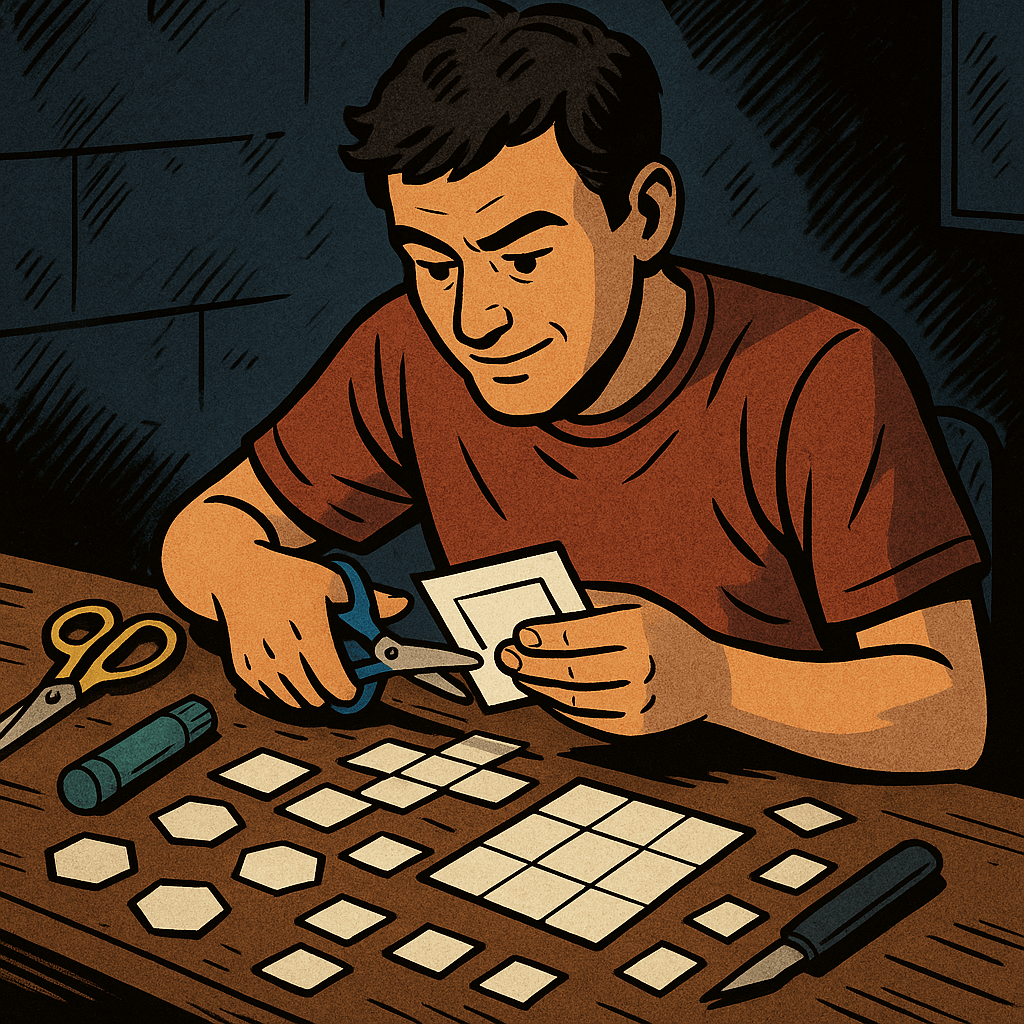
3. Cut and Assemble ✂️
Grab scissors or a craft knife with a cutting mat. Precision isn’t critical right now, but clean cuts make handling easier. Foam board or chipboard can be used to mount boards or larger tiles for sturdiness.
4. Use Stand-ins for Components 🎲
You don’t need custom pawns or miniatures. Borrow dice, pawns, cubes, or tokens from other games, or use coins, buttons, and beads. Anything that represents movement or resources will do.
5. Keep It Organized 📦
Small containers, ziplock bags, or even repurposed food boxes can keep your prototype neat. Organized components save time during playtests and make the experience smoother for everyone.
6. Focus on Function, Not Art 🎨
At this stage, your prototype should communicate rules and mechanics, not polished graphics. Handwritten notes, plain shapes, and placeholder icons are perfectly fine.
7. Test Early, Test Often 🔍
Once your basic version is playable, put it on the table as soon as possible. Even a rough draft will reveal valuable insights about pacing, balance, and player choices. Don’t wait for it to “look good” — playability comes first.
Final Thoughts
Building your first prototype doesn’t have to be expensive or complicated. Start small, keep it scrappy, and focus on gameplay. Every test, no matter how rough, brings your design closer to a finished game.
Your first prototype is not about perfection — it’s about progress. So grab some paper, print a few cards, and start building today. The table is waiting.
Discover more from BoardGame Seeds
Subscribe to get the latest posts sent to your email.


Leave a comment