
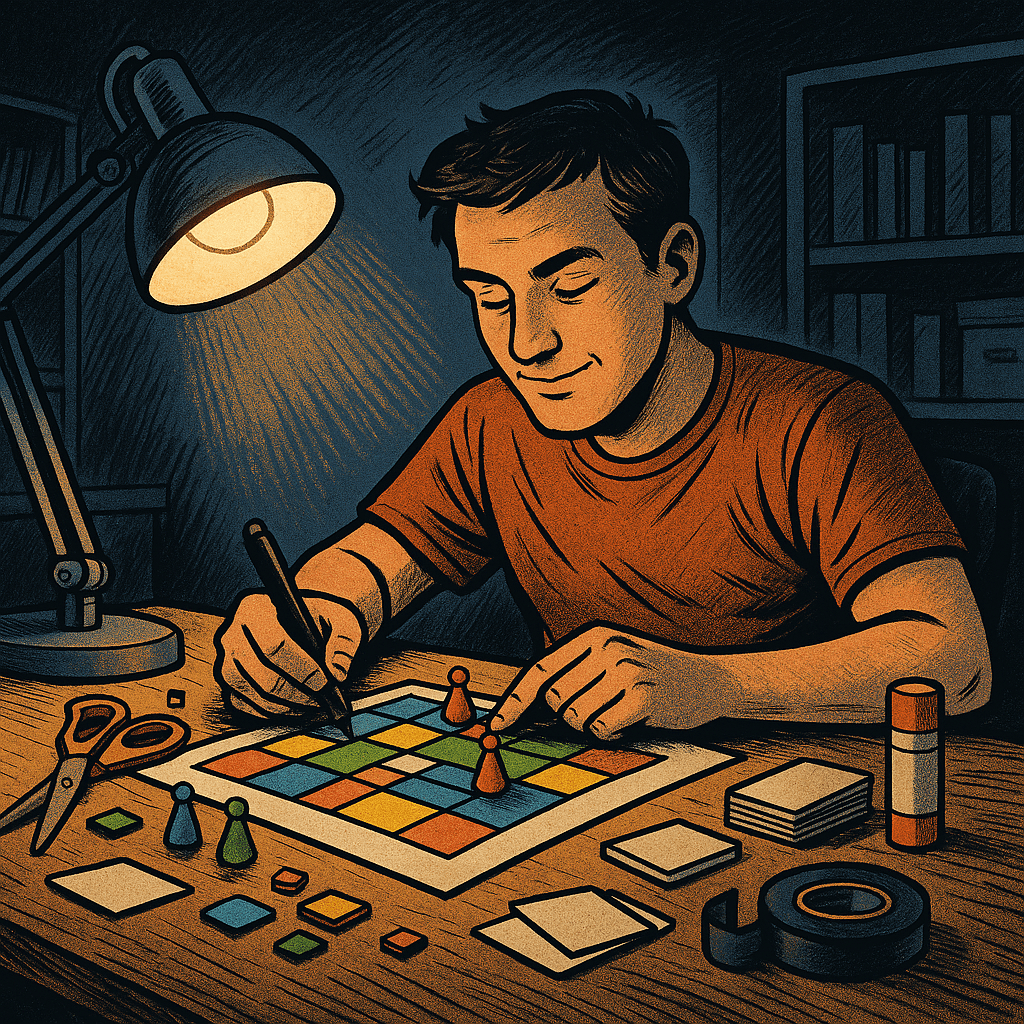
When you’re taking your board game idea from concept to table, you don’t need a professional workshop or expensive equipment. What you do need is a simple set of reliable tools that will help you build your first physical prototype — fast, affordable, and ready for playtesting.
Here are the 10 essentials every board game designer should keep on their workbench:
1. Sharp Scissors ✂️
The most basic, yet indispensable tool. You’ll use them for cutting cards, paper boards, player aids, and more. Always keep a sharp pair dedicated just for prototyping.
2. Precision Craft Knife (X-Acto or Olfa) 🔪
For clean and accurate cuts, especially when working with tokens, tiles, or thicker materials like chipboard or foam board. A cutting mat is highly recommended to protect your table.
3. Steel Ruler 📏
Perfect for straight lines and measuring exact dimensions. Pair it with your craft knife for accurate board and tile cuts.
4. Cutting Mat 🟩
Self-healing cutting mats provide a safe surface for all your trimming, while also giving you measurement guides right on the table.
5. Glue Stick or Spray Adhesive 🧴
To mount printed components onto thicker paper or board. Spray adhesive works best for large areas like game boards, while glue sticks are great for small pieces.
6. Double-Sided Tape 🩹
Fast, clean, and reliable — excellent for quick fixes or attaching card fronts and backs without waiting for glue to dry.
7. Card Sleeves 🃏
Instead of professionally printed cards, slip your printed prototypes into standard card sleeves. You can even reuse old Magic or Pokémon cards as stiff backings.
8. Foam Board or Chipboard 📦
Ideal materials for creating durable game boards, tiles, and tokens. They’re lightweight, affordable, and easy to cut with a craft knife.
9. Permanent Markers & Pens 🖊️
Sometimes speed is everything. Having markers and pens handy lets you sketch components, label tokens, or quickly update rules without reprinting.
10. Small Containers or Bags 🎒
Ziplock bags, small plastic containers, or even pillboxes are lifesavers for organizing components. Keeping your prototype neat and portable will save time during playtests.
Bonus Tip: Recycle & Repurpose
Don’t underestimate the power of reusing pieces from other games. Old pawns, dice, or cubes can instantly bring your prototype to life without extra cost.
Final Thoughts
Your first prototype doesn’t need to be beautiful — it just needs to exist. With these 10 simple tools, you can bring your game idea to the table, start testing immediately, and focus on what really matters: how it plays.
Discover more from BoardGame Seeds
Subscribe to get the latest posts sent to your email.


Leave a comment